
If you own a home in Florida—especially along the coast—protecting your property from hurricanes isn’t optional. It’s essential. That’s where a wind mitigation inspection comes in.
For homeowners in Panama City and throughout the Florida Panhandle, this specialized inspection doesn’t just evaluate storm protection features—it can significantly reduce your insurance premiums.
Let’s break down what a wind mitigation inspection is, what it includes, and how it can put real money back in your pocket.
What Is a Wind Mitigation Inspection?
A wind mitigation inspection is a specialized home inspection that evaluates how well your home can withstand strong winds from hurricanes and severe storms.
Unlike a full home inspection, this assessment focuses specifically on features that reduce wind damage risk. Insurance companies use the results to determine how vulnerable your home is to storm damage—and how much you should pay for coverage.
In Florida, many insurance providers offer substantial discounts for homes with wind-resistant construction features.
Why Wind Mitigation Matters in Panama City
Living in Panama City means living in a hurricane-prone region. The Florida Panhandle has experienced multiple major storms over the years, and insurers carefully evaluate risk in this area.
Homes built or upgraded with storm-resistant features are less likely to suffer catastrophic damage. That reduced risk often translates into lower insurance premiums.
If you haven’t had a wind mitigation inspection, you may be leaving money on the table.
What Does a Wind Mitigation Inspection Include?
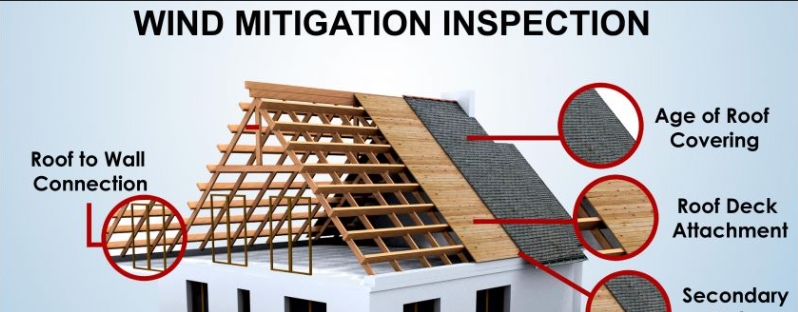
During a wind mitigation inspection, a licensed inspector evaluates several critical components of your home:
1. Roof Covering
- Age of the roof
- Type of materials used
- Compliance with Florida Building Code
Newer roofs built to modern codes often qualify for discounts.
2. Roof-to-Wall Attachment
This is one of the biggest discount factors.
Inspectors check how the roof structure is attached to the walls:
- Toe nails (minimal protection)
- Clips
- Single wraps
- Double wraps (strongest)
Stronger connections = better resistance to uplift during storms.
3. Roof Deck Attachment
The inspector examines:
- Nail size
- Nail spacing
- Attachment method
Proper fastening improves structural stability during high winds.
4. Roof Geometry
Certain roof shapes perform better in hurricanes:
- Hip roofs (best)
- Gable roofs (more vulnerable)
Hip roofs often qualify for major insurance discounts.
5. Secondary Water Resistance (SWR)
This refers to an additional waterproof barrier under the roof covering that helps prevent interior damage if shingles are blown off.
6. Opening Protection
This includes:
- Impact-rated windows
- Hurricane shutters
- Reinforced garage doors
Protected openings significantly reduce internal pressure damage during storms.
How Can a Wind Mitigation Inspection Save You Money?
Here’s where homeowners get excited.
Insurance companies in Florida are legally required to offer discounts for verified wind-resistant features.
Depending on your home’s construction, you could save:
- Hundreds of dollars per year
- Sometimes over $1,000 annually
- Thousands over the life of your policy
In many cases, the inspection pays for itself within the first year through insurance savings alone.
Who Needs a Wind Mitigation Inspection?
You should strongly consider one if:
- You recently replaced your roof
- Your home was built after 2001 (updated building codes)
- You installed hurricane shutters or impact windows
- Your insurer requested it
- You’ve never had one before
Even older homes can qualify for discounts if upgrades have been made.
How Is It Different from a 4-Point Inspection?
Many homeowners confuse these two.
A 4-point inspection evaluates:
- Roof
- HVAC
- Plumbing
- Electrical
A wind mitigation inspection focuses strictly on hurricane resistance features.
Both may be required by insurers—but they serve different purposes.
How Long Does It Take?
Most wind mitigation inspections take about 30–60 minutes, depending on home size and accessibility.
The inspector documents findings with photographs and submits a standardized Florida form to your insurance company.
Why Experience Matters
Proper documentation is critical. Insurance discounts depend entirely on accurate reporting and clear photographic evidence.
With over 25 years of industry experience and more than 15,000 inspections conducted throughout the Panhandle, the team at Avant Home Inspections understands local construction practices and evolving building codes.
That experience ensures you receive every eligible credit your home qualifies for.
When Should You Schedule One?
The best times to schedule a wind mitigation inspection are:
- Before renewing your homeowner’s insurance
- After installing a new roof
- After hurricane upgrades
- When purchasing a home
- If your policy premium has increased significantly
Final Thoughts
In a hurricane-prone area like Panama City, a wind mitigation inspection isn’t just a smart precaution—it’s a strategic financial decision.
By verifying your home’s storm-resistant features, you could lower your insurance premiums while gaining peace of mind before the next storm season.
If you’re unsure whether your home qualifies for wind mitigation discounts, scheduling an inspection is the first step toward protecting both your property and your wallet.